-
Gloria Steinem스크랩북 2026. 9. 3. 22:48
.
1
Gloria Steinem Came to New York to Be a Writer. She Became a Movement.
Sept. 3, 2026, The New York Times
아래는, 사진과 캡션도 함께, 위 에세이에서 (순서 없이 발췌)
Her home in a brownstone on Manhattan’s Upper East Side, which you can tour online, is filled with books, including a shelf she dedicated to those by “Friends Who Write.”
But she brought in politics whenever she could, noting in the Paul Newman profile that “His attendance at civil-rights rallies and demonstrations, for instance, occasionally caused his films to be banned in the South, but he couldn’t care less. ‘I’m a citizen as well as an actor,’ he said firmly, ‘and I’m damn well going to do what I want. A man with no enemies is no man.’”
Her success with these kinds of pieces earned her the go-ahead to write a major magazine profile of James Baldwin for Vogue in 1964.
“The death, or the spiritual death, of the young and talented has been as much a fact of Baldwin’s life as an obsession in his work,” she writes in a particularly beautiful passage. “‘Most of my friends,’ he says simply, ‘died before they were 30.’”
“Somewhere in all his books and most of his conversations there comes a mourning sentence like this one from the play,” Steinem writes, quoting: “He was a beautiful cat, and they killed him. That’s all. That’s all.” The line is such classic Baldwin and the way she conveys it shows how closely she had studied him and how much she was paying attention.
“Outrageous Acts and Everyday Rebellions” is a “portrait of the writer as a young woman,” as it were, showing how she balanced her ambition, pride and the practical need to make a living.
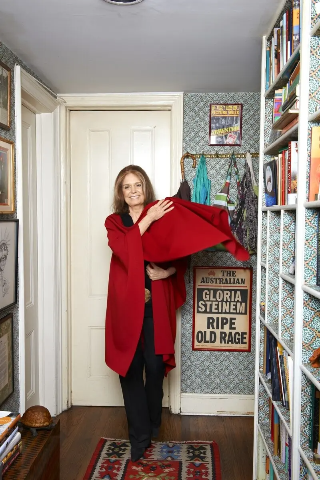
Gloria Steinem in her Upper East Side home in 2011.
Credit...Jason Schmidt/Trunk Archive
2
Gloria Steinem, Personification of the Women's Movements, Dies at 92
Sept. 3, 2026, The New York Times
3
Steinem's N.Y.C. Brownstone Will Continue to Be a Sanctuary for Feminism
By Anna Kodé
Sept. 3, 2026, The New York Times
아래는, 사진과 캡션도 함께, 위 기사에서
But for decades Ms. Steinem’s Upper East Side home was also a gathering space for other thinkers, activists and cultural and political figures who would assemble there to discuss social issues. A meeting held in the living room led to the formation of Ms. magazine in 1971, which Ms. Steinem co-founded, and she hosted her well-known “talking circles” there for years.
It will continue to be used for the purpose of political gathering and discussion after her death, Jill Heller, the director of programs at Gloria’s Foundation, said on Wednesday.
“There’s an immediate warmth when you come in the door,” said Synclaire Warren, a feminist activist, who hosted an event with Ms. Steinem in February for Black History Month. The topic was Black maternal health, Ms. Warren said, and discussing it in Ms. Steinem’s home added a feeling of safety.
Ms. Steinem’s home is full of books, letters, photographs and artifacts from her travels. Empty wall space is rare. Ms. Steinem hung a poem Alice Walker had written about her ...
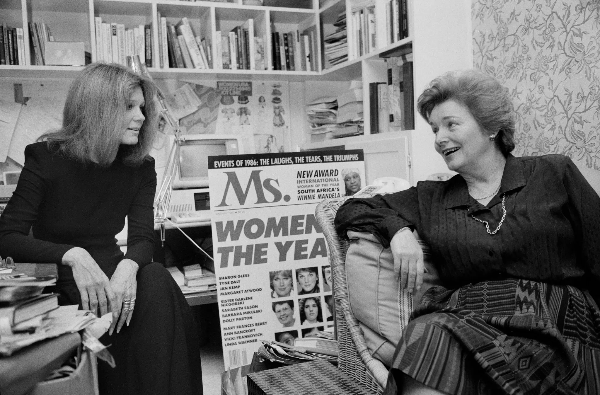
Gloria Steinem, left, sits with Ms. magazine co-founder Patricia Carbine in 1987.
Credit...Ángel Franco/The New York Times

Ms. Steinem took pride in the ability to offer her home to anybody who needed a space.
Credit...Nina Westervelt for The New York Times
'스크랩북' 카테고리의 다른 글
How Paul Williams Built White and Black L. A. (2) 2026.08.26 Obama Presidential Center (0) 2026.06.21 오늘 뉴욕 타임즈에서 처음 읽고 본 강남 구룡 마을 (2) 2026.03.30 Gaon Choi and Chloe Kim (0) 2026.02.14 Australian Open Tennis Finals Highlights (0) 2026.02.02